Lab Members
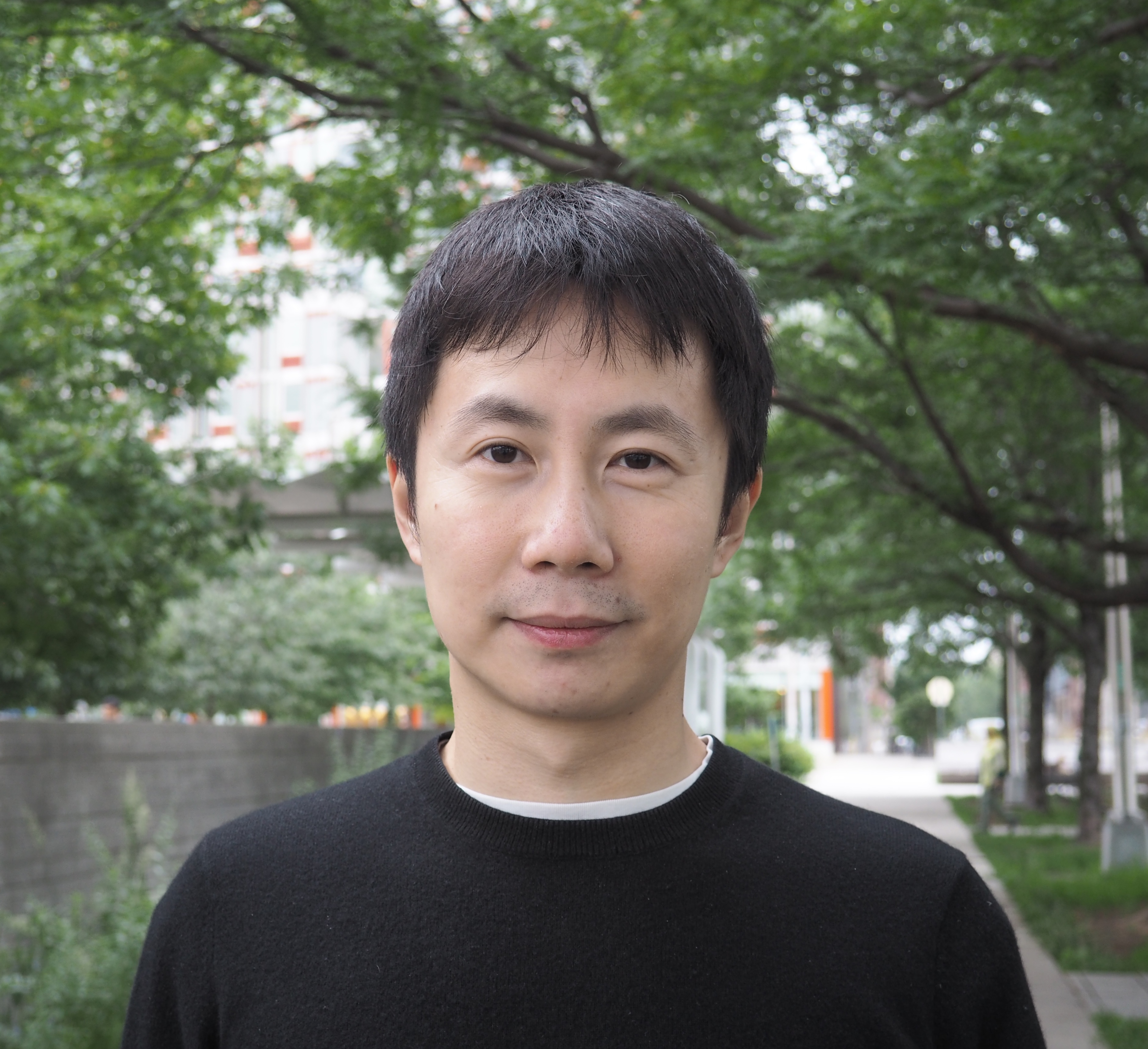
Yue Liu, Ph.D.
Principal Investigator
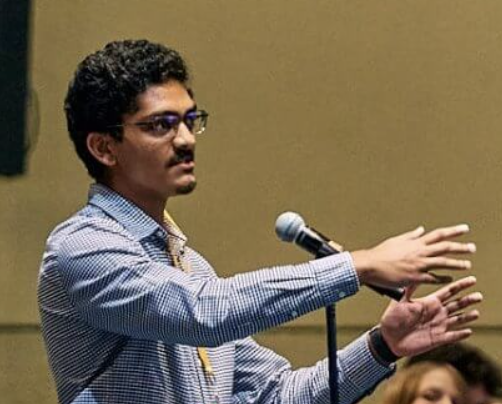
Aneesh Nudurupati
Undergraduate Research Assistant
Lab Alumni
- Dylan Pitchford, Undergraduate Research Assistant
- Sarah Haque, Ph.D. Rotation Student
We use computational and theoretical tools to study how the dynamics of interconnected neurons enable the brain to solve a wide range of cognitive tasks flexibly and efficiently.
There is an ancient saying from China: “The wise delight in water; the kind delight in mountains” (智者乐水,仁者乐山). Indeed, the essence of intelligence is its fluidity—our ability to apply what we learn in new situations.
For example, imagine the first time you learned how to add two numbers. You were taught a set of rules and shown how to solve a few simple examples problems. Once you grasped the rules, however, you could apply them to solve infinitely many new addition problems. How can we do so much from learning so little? In other words, how do brains extarct abstract knowledge from limited experience and generalize them to novel situations?
Our lab seeks to understand the neural circuit basis of this fluid intelligence, using a variety of computational and theoretical tools. We work closely with neuroscientists and psychologists to constrain and test our theories and models with neural and behavioral data. Eventually, our goal is to uncover general computational principles underlying fluid intelligence in the brain.
This is a deeply interdisciplinary problem that has intrigued cognitive scientists, neuroscientists, and AI researchers. We believe that solving it requires insights from a wide range of disciplines as well. If you are interested in solving this problem, please reach out!
Get in touch here.
Principal Investigator
Undergraduate Research Assistant
See Google Scholar for complete list of publications.
Stiles-Nicholson Brain Institute
Department of Biomedical Engineering
Florida Atlantic University
Email: yueliu@fau.edu